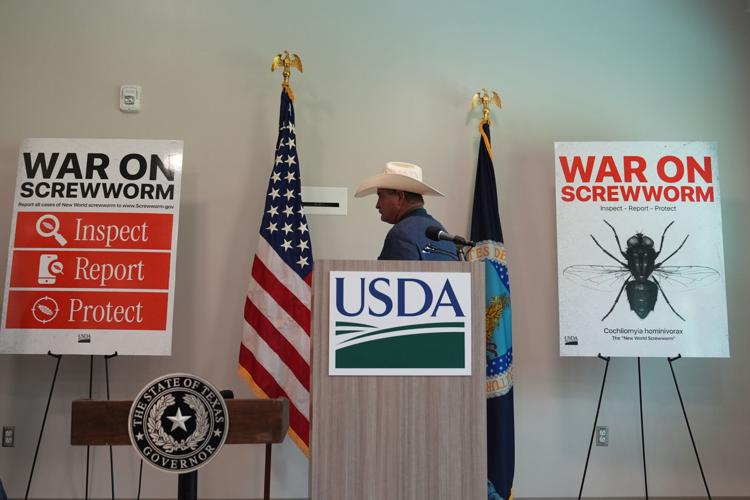
A rancher arrives for a news conference with U.S. Agriculture Secretary Brooke Rollins at the Knipling-Bushland U.S. Livestock Insects Research Laboratory in Kerrville, Texas, Monday, June 8, 2026.
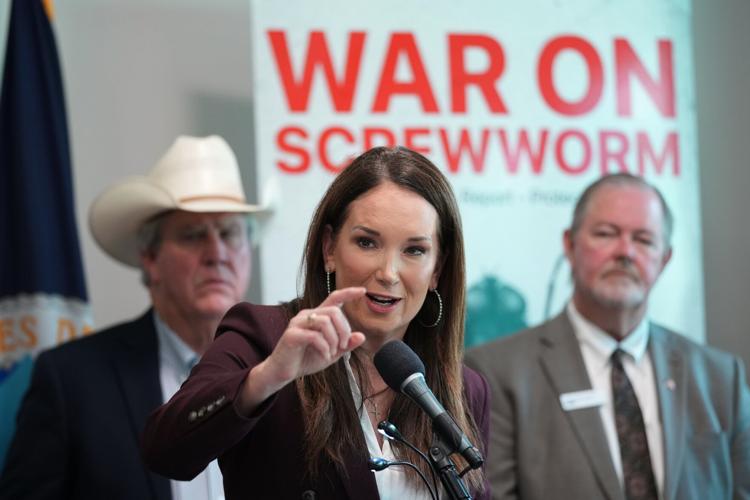
U.S. Agriculture Secretary Brooke Rollins, center, holds a news conference with ranchers, researchers and officials at the Knipling-Bushland U.S. Livestock Insects Research Laboratory in Kerrville, Texas, Monday, June 8, 2026.
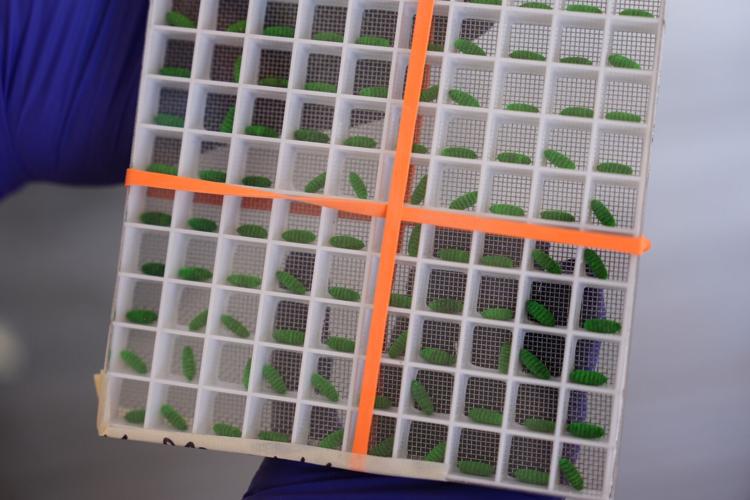
FILE - A test container of dyed fly pupae are displayed at a Domestic New World Screwworm Sterile Fly Production Facility to combat the northward spread of NWS and protect American livestock, in Edinburg, Texas, Feb. 9, 2026.
A flesh-eating cattle parasite spreads beyond Texas as new screwworm cases are found
Three more cases of the New World screwworm have been confirmed, including one outside Texas, demonstrating the difficulty of stopping a pest that could potentially devastate the nation’s cattle industry
A rancher arrives for a news conference with U.S. Agriculture Secretary Brooke Rollins at the Knipling-Bushland U.S. Livestock Insects Research Laboratory in Kerrville, Texas, Monday, June 8, 2026.
Eric Gay - AP
U.S. Agriculture Secretary Brooke Rollins, center, holds a news conference with ranchers, researchers and officials at the Knipling-Bushland U.S. Livestock Insects Research Laboratory in Kerrville, Texas, Monday, June 8, 2026.
Eric Gay - AP
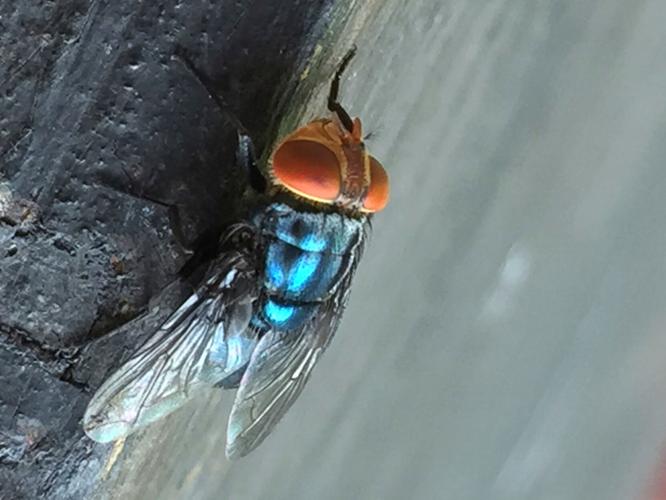
FILE - An adult New World screwworm fly sits in this undated photo.
Denise Bonilla - U.S. Department of Agriculture
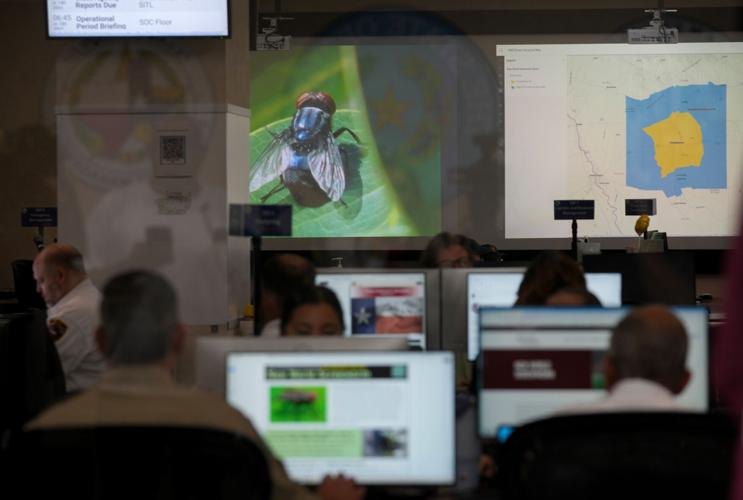
Officials work at the State Operations Center during Texas' response to the New World Screwworm in Austin on Friday, June 5, 2026.
Jay Janner - Austin American-Statesman
FILE - A test container of dyed fly pupae are displayed at a Domestic New World Screwworm Sterile Fly Production Facility to combat the northward spread of NWS and protect American livestock, in Edinburg, Texas, Feb. 9, 2026.
Three more cases of the New World screwworm have been confirmed, including one outside the main cluster in Texas, demonstrating the difficulty of stopping a resurgent pest that could devastate the nation's cattle industry, the U.S. Department of Agriculture announced Monday.
The screwworm is actually a fly larva that eats living flesh instead of dead material. The flies lay their eggs in open wounds of animals like cattle, but wildlife, pets and occasionally even humans can be infested. The government has a program to breed sterile male flies and drop swarms of them from planes to mate with wild females, which kept screwworm contained at the southern end of Panama for decades.
Copyright 2026 The Associated Press. All rights reserved. This material may not be published, broadcast, rewritten or redistributed without permission.